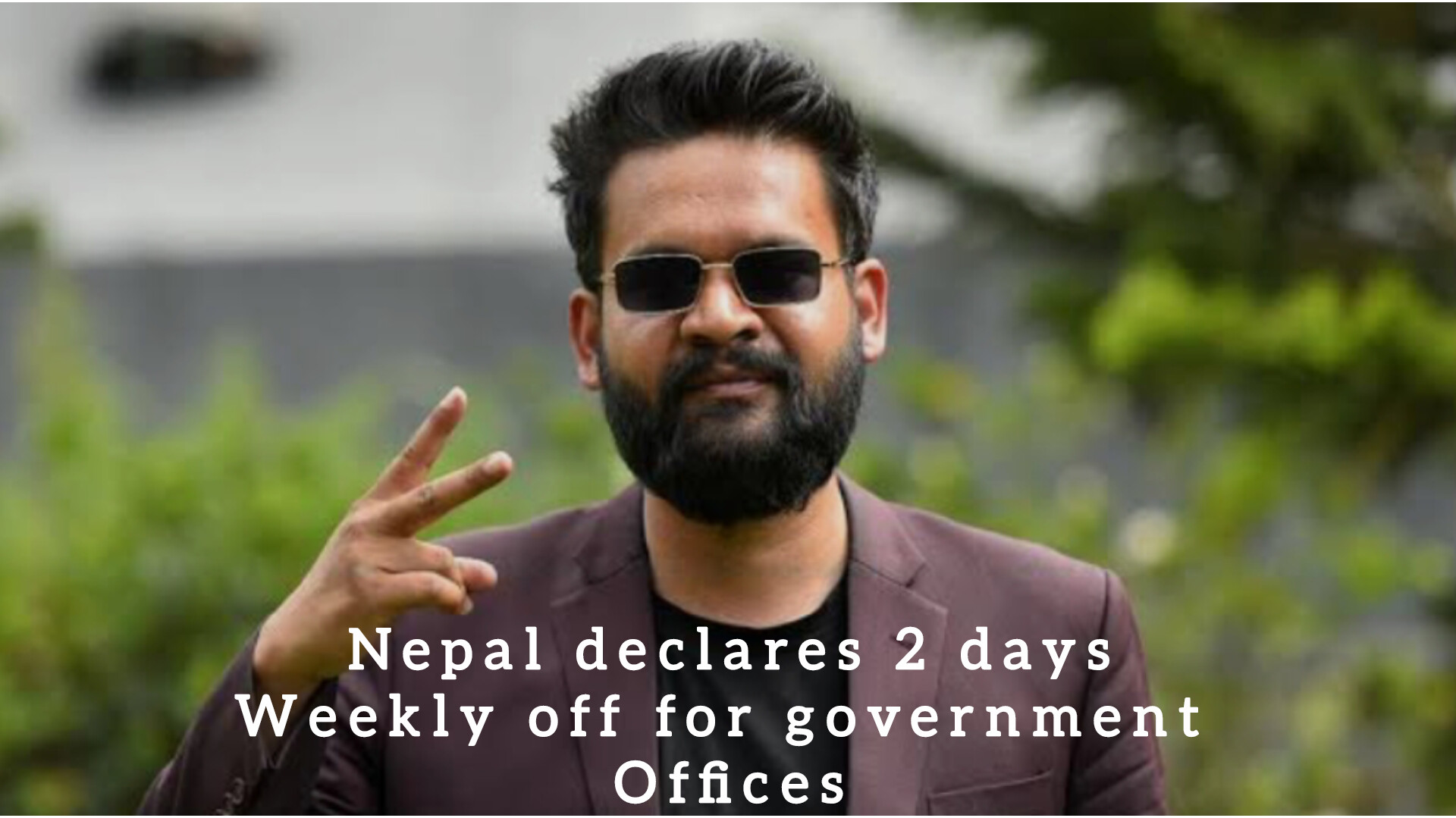
Himal Hub / Nepal has once again stepped into a familiar policy experiment introducing a two-day public holiday for the third time in nearly three decades. While the idea aligns with global work trends, its history in the country raises a critical question: will this attempt succeed where the previous two failed?
A Policy with a History of Setbacks
Nepal’s journey toward a five-day workweek dates back to 1992, when an administrative reform commission recommended reducing working days to improve efficiency and ease traffic congestion. Acting on similar ideas, the government led by Krishna Prasad Bhattarai introduced a two-day weekend in 1999. However, the policy was limited to the Kathmandu Valley and lasted only about two years before being discontinued.
The second attempt came much later, in 2022, under Prime Minister Sher Bahadur Deuba. This time, the initiative was driven by economic urgency—specifically, a growing trade deficit and declining foreign currency reserves. The government hoped that reducing commuting days would cut fuel consumption. Despite these intentions, the policy collapsed within a month.
Crisis-Driven, Not Strategy-Led
Unlike many countries where two-day weekends are a long-standing labor standard, Nepal has repeatedly treated the policy as a short-term solution to crises, whether fuel shortages, traffic congestion, or economic downturns.
Even during the COVID-19 recovery phase in 2020, the Ministry of Tourism explored the concept as a way to revive domestic tourism and stimulate the economy. A government study revealed that out of 127 countries surveyed, 115 had already adopted a two-day weekend highlighting how far Nepal lags behind global norms.
The Possibility for Change
The same study presented compelling arguments in favor of the reform. It projected annual savings of over NPR 1.65 billion through reduced operational costs. More importantly, it emphasized broader social and economic benefits:
- Improved Productivity: A 40-hour work week spread across five days could enhance efficiency and employee output.
- Boost to Domestic Tourism: If even a fraction of workers used their extra day off to travel, local economies could see significant gains.
- Better Work-Life Balance: With nearly 500,000 employees directly benefiting and around 2.5 million dependents indirectly families could gain valuable time together.
- Social and Gender Impact: More leisure time could ease family stress and promote a more balanced domestic life.
Changing Context, New Possibilities
One major difference today is Nepal’s administrative structure. In the past, citizens often had to travel long distances to district headquarters for government services, making extended closures inconvenient. Now, with services increasingly available at the local level, the burden on service seekers has significantly reduced.
This shift strengthens the argument that a two-day weekend may no longer disrupt public access as it once did.
The Unanswered Questions
Despite its potential, challenges remain. The lack of a clear framework for educational institutions and informal labor sectors raises concerns about uneven implementation. Nepal’s large informal workforce, in particular, may see little to no benefit from the policy.
A Defining Moment
Nepal’s third attempt at a two-day weekend stands at the intersection of necessity and opportunity. It is no longer just a crisis-response tool but could become a structural reform aligning the country with global labor practices.
Whether it succeeds this time will depend not just on policy announcement, but on consistent implementation, sector-wide coordination, and the government’s ability to move beyond short-term fixes toward long-term vision.