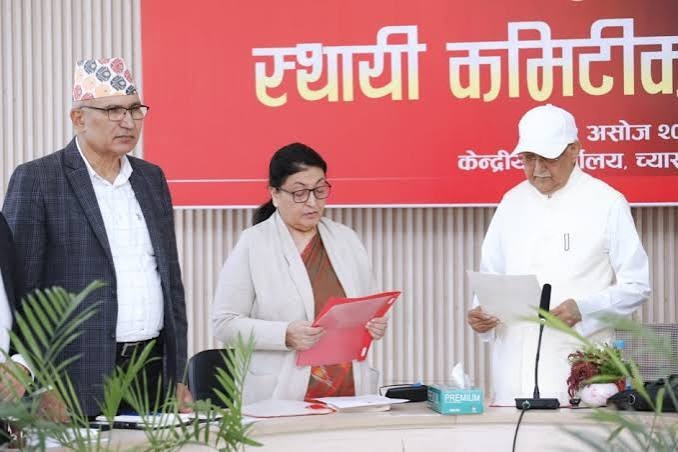
Himal Hub / Former President Bidya Devi Bhandari has formally assumed her new role within the CPN-UML, taking the oath as the party’s senior leader during a Standing Committee meeting in Kathmandu on Thursday.Bhandari took the oath before UML Chairman KP Sharma Oli at the party’s central office in Chyasal. Her formal induction into the party’s senior leadership marks a significant step in her return to active party politics after serving two terms as Nepal’s president.
The oath ceremony was held ahead of the UML Standing Committee meeting, which brought Bhandari into the party’s highest organizational discussions in her newly assigned capacity. The meeting is the first Standing Committee gathering she has attended since being given the senior leadership position.Bhandari’s appointment follows a decision by the UML Central Committee to bring her into the party’s senior leadership structure. The party’s Secretariat had earlier recommended her appointment as a senior leader, with the Central Committee subsequently endorsing the decision.
The Central Committee has also nominated Bhandari as a senior vice-chair, placing her in a prominent position within the party hierarchy. Her participation in Thursday’s meeting therefore represents her first appearance in the UML’s formal decision-making forums since receiving the new responsibilities.The development is particularly notable given Bhandari’s political history with the UML. Before becoming president, she served as a vice-chair of the party and held several other political responsibilities. She later left active party politics after being elected president of Nepal in 2015.
Bhandari served as Nepal’s president for two consecutive terms, becoming the country’s first woman to hold the position. Following the completion of her presidential tenure, she gradually began signaling her return to party politics. Her formal elevation within the UML now places her back at the center of the party’s organizational and political affairs.Her return has also attracted considerable political attention because of the position she previously occupied as head of state. The move brings a former president back into an active role within a major political party, making her renewed involvement a significant development in Nepal’s evolving party politics.
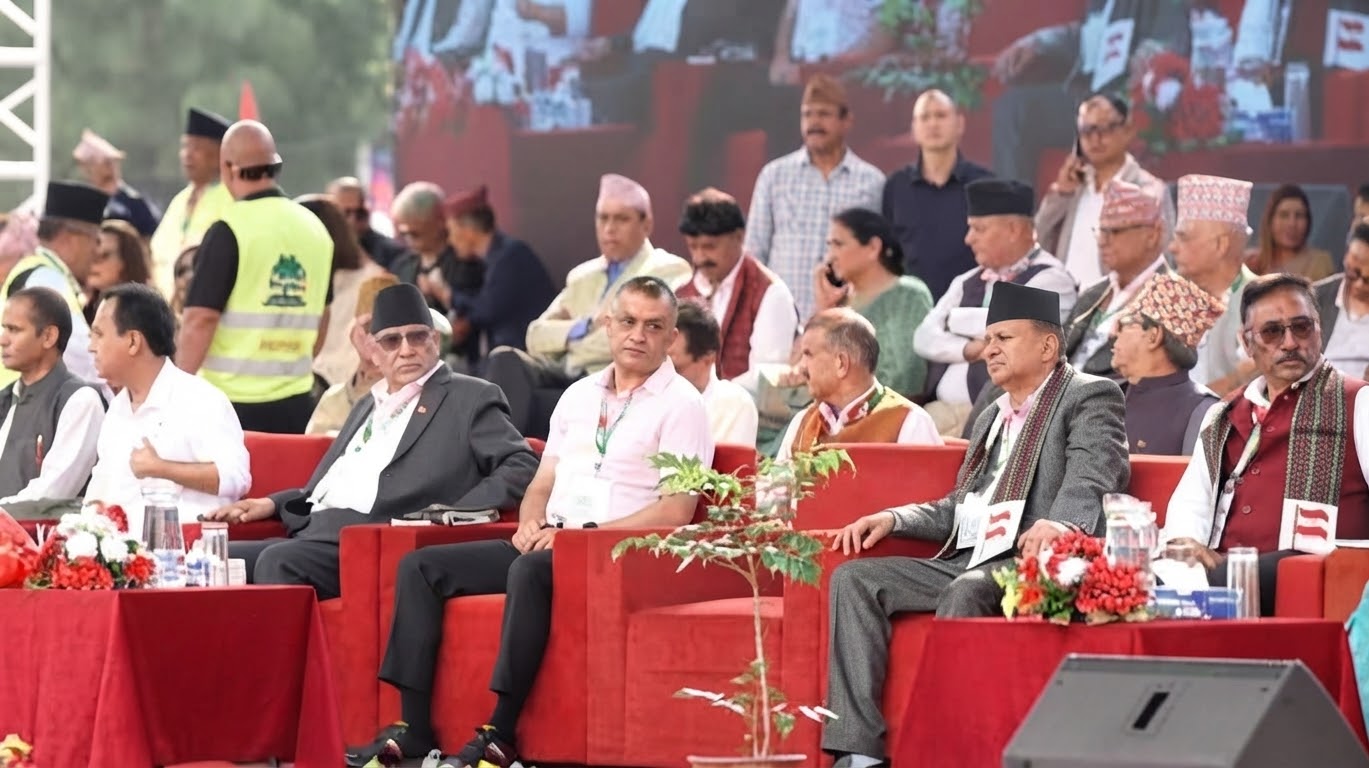
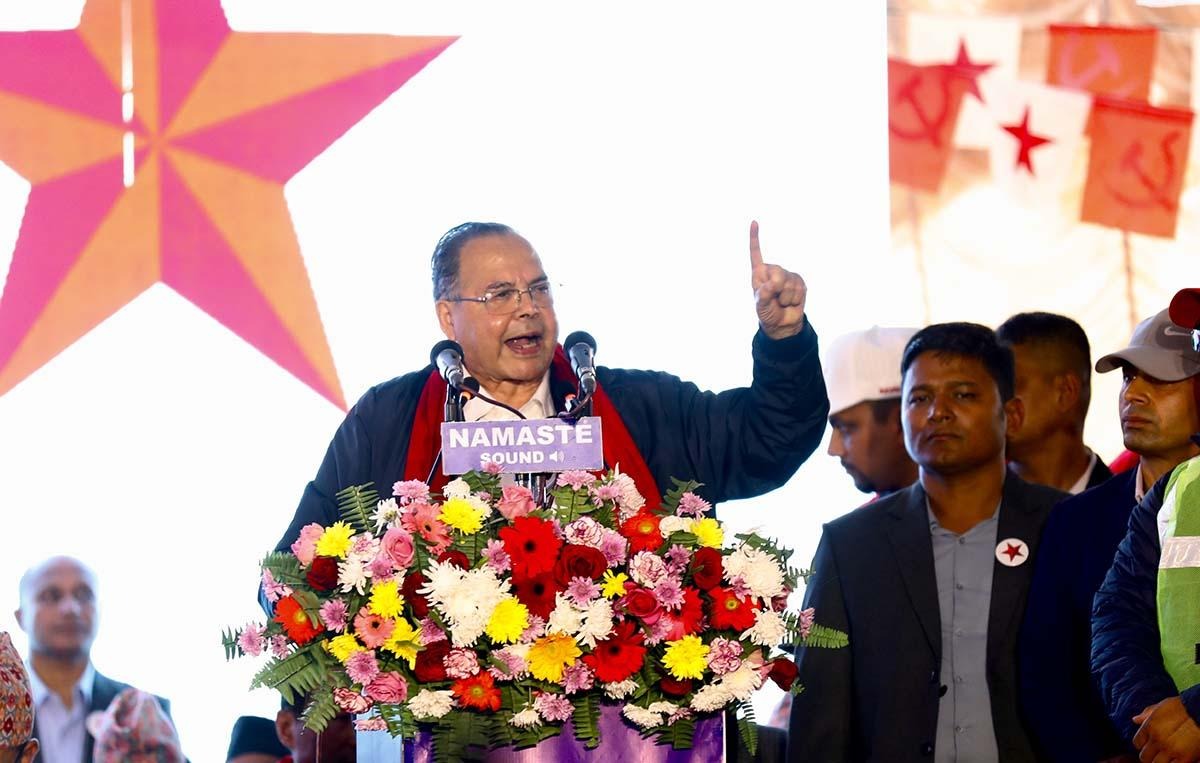
Thursday’s Standing Committee meeting is also important for the UML because it is the party’s first such meeting following its 11th General Convention. Contemporary political developments and the party’s future activities are among the issues expected to be discussed by the leadership.Bhandari’s presence gives the meeting additional political significance. Her new position allows her to participate in the party’s senior-level deliberations, including discussions within the Standing Committee, Central Committee, Politburo and Secretariat, according to the party’s recent organizational decisions.
The timing of her formal return is also significant for the UML, which is navigating a changing political environment and reassessing its organizational direction following recent political developments and electoral setbacks. Her experience as a former party vice-chair and two-term president could become an important factor as the UML debates its future strategy and leadership structure. Oli administered the oath to Bhandari, formally marking her re-entry into the party’s institutional leadership. Their political relationship dates back to Bhandari’s earlier years in UML leadership and her subsequent tenure as president.
With Thursday’s oath, Bhandari has now formally moved from being a former head of state to an active senior figure within the UML’s organizational structure. Her participation in party meetings is expected to make her role increasingly visible in the party’s future political and organizational decisions.The development could therefore have implications beyond the formal restructuring of UML leadership. Bhandari’s return places a former president with a long political association with the party back inside its core decision-making process at a time when Nepal’s major political forces are reassessing their strategies and organizational priorities.