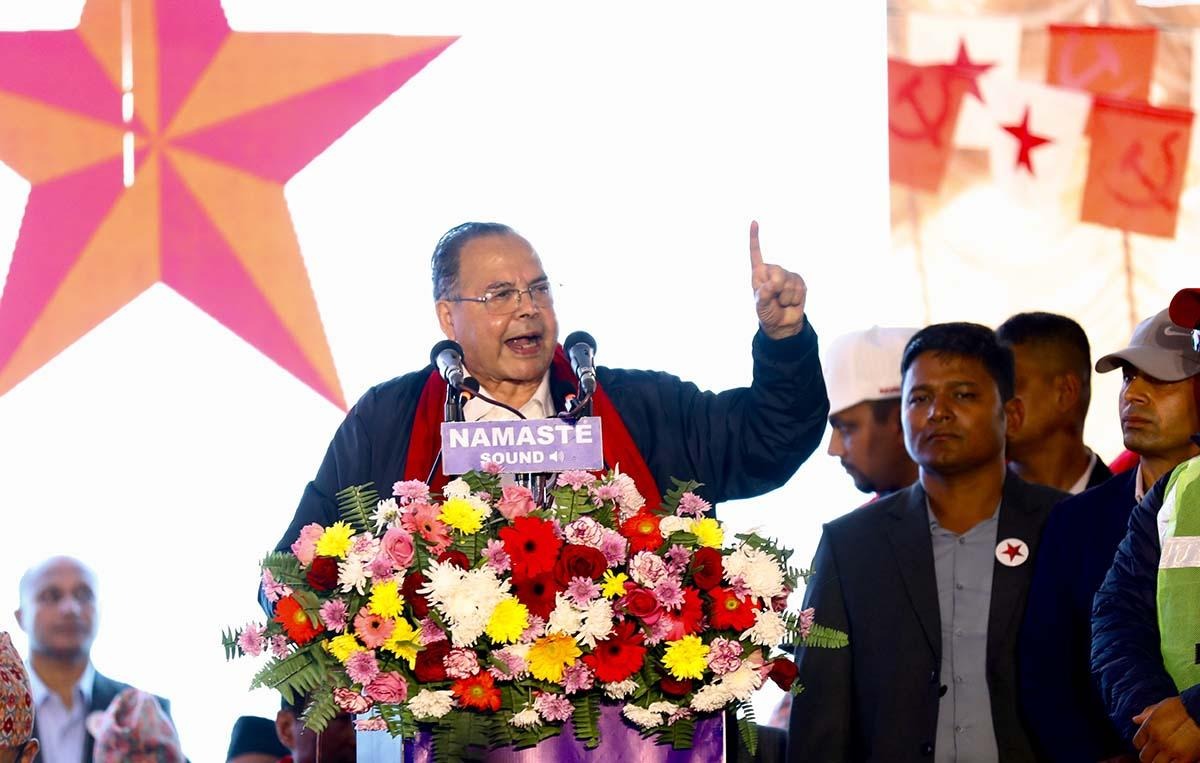
Himal Hub/ Former Prime Minister Jhalanath Khanal is moving to build a broader platform among Nepal’s left-wing forces amid growing dissatisfaction with the leadership of major communist parties.
Khanal has agreed to lead a new initiative called the ‘Socialist Awakening Campaign’, following a meeting of left-wing leaders on Saturday.
More than 70 leaders from the CPN and other communist groups attended the meeting, according to left-wing leader Maheshwar Dahal. The participants discussed current political developments as well as ideological issues facing Nepal’s leftist movement.
The gathering also raised concerns over the weakening of ideological discussion and political training within major communist parties.
The campaign is not, however, being presented as a new political party at this stage.
Khanal has said the immediate objective is to reorganise the left-wing movement and encourage broader unity among communist forces. He has ruled out any immediate decision to establish a separate party.
Dahal, meanwhile, has suggested that the new campaign could eventually develop into a political party if the existing leadership fails to respond to the concerns raised by the group.
The move comes after Khanal’s growing differences with the leadership of the CPN. He has previously submitted a 36-point alternative proposal within the party and put forward 22 recommendations related to its general convention.
Several senior figures from different left-wing groups were reportedly involved in Saturday’s gathering, including Haribol Gajurel, Kul Prasad KC, Maheshwar Dahal and Paniraj Bamjan. Leaders associated with the CPN, CPN-UML, the former CPN (Unified Socialist) and other leftist groups were also reported to have attended.
CPN spokesperson Prakash Jwala, however, said he did not have information about which party leaders took part in the meeting.
The organisers are scheduled to hold a press conference on Monday to outline the campaign’s objectives, organisational plans and future political activities.
The announcement could provide a clearer picture of whether Khanal’s initiative will remain a platform for left-wing coordination or eventually evolve into a separate political force.