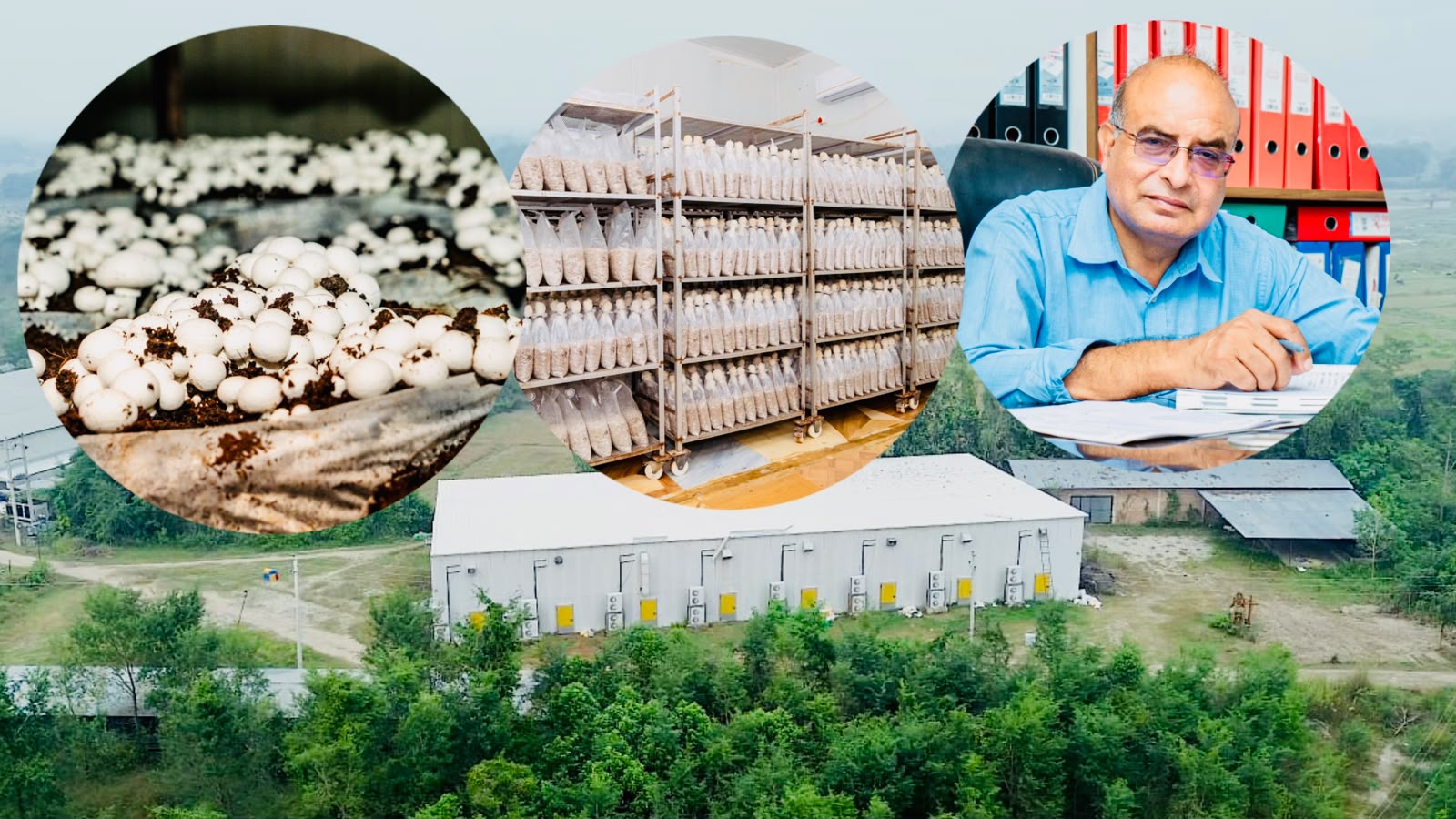
Himal Hub/ Nepal’s mushroom industry is gradually shifting from traditional farming practices toward technology-driven commercial production, with ON Biotech Agro Industries Public Limited emerging as one of the businesses seeking to expand the sector through industrial-scale cultivation and mushroom seed production.
Based in Tilottama-16, Rupandehi, the company has significantly expanded its business operations in recent years, supported by investments in modern machinery, production infrastructure, mushroom cultivation, and the supply of quality mushroom seeds to farmers.
The company’s turnover has increased from approximately Rs 5 crore in fiscal year 2022/23 to Rs 21.5 crore in fiscal year 2025/26, representing growth of around 4.3 times over three years. The expansion highlights the growing commercial potential of mushroom farming in Nepal, particularly as demand for mushrooms and reliable planting materials continues to create opportunities for farmers and agribusinesses.
Founded and expanded under the leadership of C.P. Sharma, the company has focused on developing mushroom cultivation into a more organized and commercially viable industry. By strengthening seed production and distribution, ON Biotech aims to make it easier for farmers to engage in mushroom farming and expand their production capacity.
Modern Technology Strengthens Production Capacity
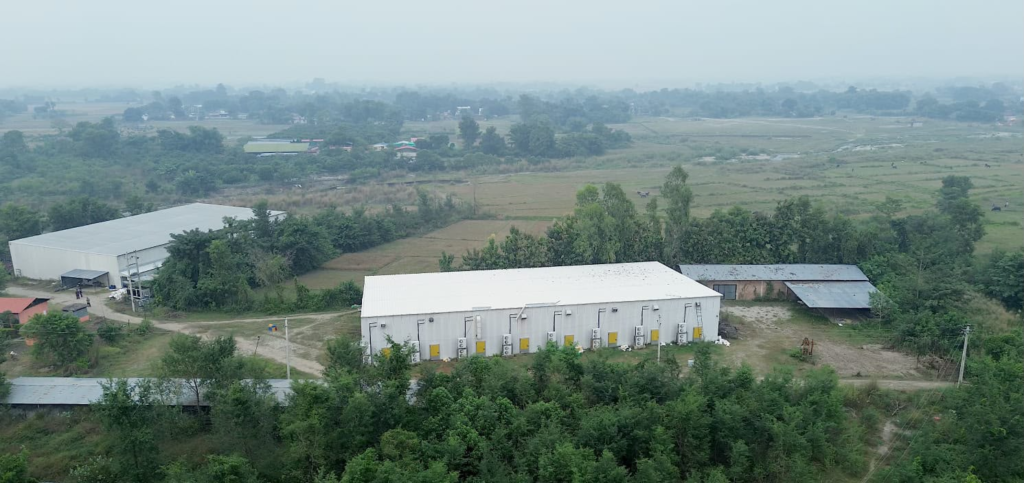
ON Biotech has established its industrial operations on approximately 10 bighas of land owned by the company. Its core business includes mushroom seed production, mushroom cultivation, and the distribution of both products to markets across Nepal.
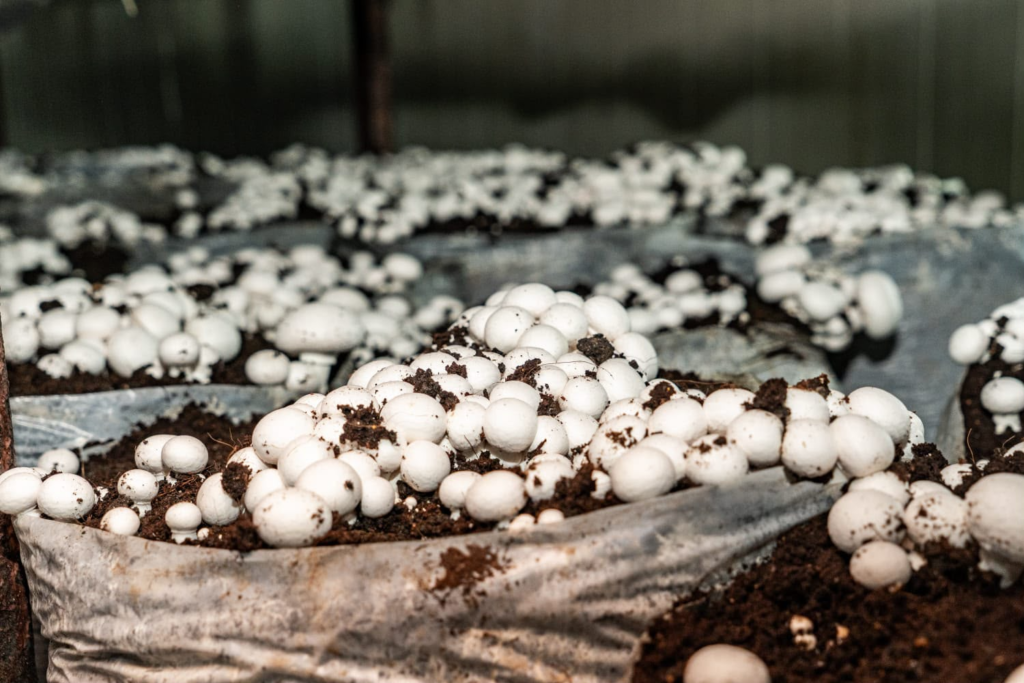
The company has placed particular emphasis on button mushrooms, commonly known in Nepal as Dalle chyau. The use of machinery and modern production systems has helped organize cultivation and improve the potential for large-scale production.
According to company director Sharma, ON Biotech has the capacity to produce up to four tonnes of mushroom seeds per day. The company also has the infrastructure to produce up to four tonnes of mushrooms daily, although its current mushroom output stands at approximately two tonnes per day.
The company produces seeds for different mushroom varieties, including those used for food and medicinal purposes. By developing its seed production capacity alongside mushroom cultivation, ON Biotech has sought to strengthen an important link in the agricultural supply chain.
Access to quality seeds is a key consideration for commercial mushroom farming. A reliable supply can help farmers plan production more effectively, while established distribution networks can connect growers with agricultural inputs and broader markets.
ON Biotech’s expansion into seed production has also encouraged local farmers in Rupandehi and other areas to take up mushroom cultivation, according to the company.
Revenue Growth Reflects Expanding Market Reach
The company’s financial performance indicates a substantial increase in the scale of its operations.
ON Biotech recorded turnover of around Rs 5 crore in fiscal year 2022/23. By fiscal year 2025/26, that figure had reached Rs 21.5 crore. This represents an increase of approximately 330 percent compared with the earlier period.
The growth has coincided with investments in production infrastructure, increased seed production capacity, and the expansion of distribution networks beyond Rupandehi.
The company estimates that it accounts for approximately 50 percent of the market for button mushrooms. This figure is based on the company’s own assessment and would require independent market data for verification.
With demand for mushrooms continuing to provide opportunities for commercial growers, ON Biotech plans to expand its business further. The company has set a target of generating approximately Rs 40 crore in revenue in the next fiscal year, which would represent a substantial increase over its reported turnover of Rs 21.5 crore in fiscal year 2025/26.
Achieving that target will depend on factors including production capacity, market demand, distribution efficiency, input costs, and the company’s ability to scale its operations.
Distribution Network Extends Across Nepal
Although the company is based in Rupandehi, its products have reached markets in several other parts of the country.
According to the company, its mushroom seeds and fresh mushrooms are distributed to Kathmandu, Bhaktapur, Lalitpur, Chitwan, Makwanpur, Itahari, Dang, Nawalparasi, Palpa, and other locations.
The expansion of this distribution network has helped connect production facilities with consumers and farmers beyond the company’s immediate operating area.
A broader distribution network is particularly important for agricultural products that require timely delivery and consistent supply. For mushroom producers, maintaining the connection between cultivation, distribution, and market demand can be critical to sustaining commercial operations.
The company’s dual focus on producing mushrooms and supplying seeds also gives it a role in supporting other growers. Rather than relying exclusively on its own farms, the business is positioned to participate in the wider mushroom production chain through agricultural inputs and distribution.
Employment and Agricultural Entrepreneurship
The growth of mushroom production has also created employment and business opportunities, according to the company.
ON Biotech estimates that approximately 2,000 people are connected to its wider business network through production, distribution, and market management. More than 200 employees are directly engaged in mushroom production.
The distinction between direct employees and people connected through the wider business network is important when assessing the company’s overall employment contribution.
Commercial mushroom farming can create opportunities across several activities, including seed production, cultivation, harvesting, packaging, transportation, and sales. As production expands, these activities can support employment as well as entrepreneurial opportunities for farmers and small businesses.
For local growers, mushroom cultivation can provide an additional source of income and an opportunity to participate in organized agricultural markets. However, the sustainability of such businesses depends on reliable access to inputs, appropriate production technology, effective disease management, and stable market channels.
ON Biotech’s experience illustrates how investment in agricultural infrastructure and seed production can support the development of a more organized mushroom industry.
Mushroom Farming Moves Toward Industrial Production
Mushrooms are increasingly being treated not only as a household vegetable but also as a commercial agricultural product with opportunities for organized production and distribution.
The development of businesses such as ON Biotech reflects a broader shift toward technology-assisted farming and investment in agricultural processing and supply systems. Industrial-scale production can help improve consistency and supply, while commercial seed production can make it easier for farmers to enter the sector.
Nevertheless, continued expansion will require businesses to manage production costs, maintain quality standards, strengthen distribution systems, and respond to changing market demand.
For ON Biotech, the next phase will involve translating its expanded production capacity and distribution reach into higher sales. Its target of Rs 40 crore in revenue in the coming fiscal year signals an ambition to further scale its operations.
If the company achieves that target, it would mark another significant step in its growth and underscore the potential of mushroom farming as a commercial agribusiness in Nepal.
The company’s expansion also highlights a wider opportunity for Nepal’s agricultural sector: combining modern technology, dependable agricultural inputs, and market-oriented production to create businesses that can support farmers, generate employment, and strengthen domestic food supply chains.