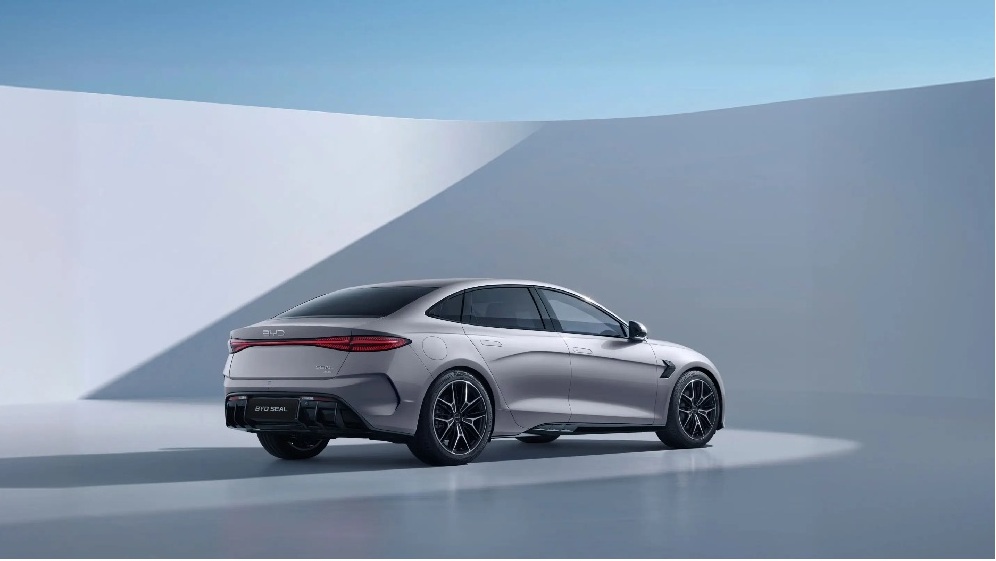
Himal Hub / The world’s largest electric vehicle (EV) manufacturer, BYD, has finally managed to halt an eight-month streak of declining sales, reporting a modest recovery in May. However, behind this symbolic rebound lies a deeper concern: while the company continues to shine in global markets, its performance in its home market, China, is steadily weakening.
According to company data, BYD sold 383,453 new energy vehicles (NEVs) in May, marking a marginal 0.3% year-on-year increase. Though the growth is modest, it has been viewed positively by investors and the wider automotive industry as a sign that prolonged sales pressure may be easing.
Production also rose by 8.8%, suggesting that the operational strain experienced since mid-2025 may be gradually stabilizing.
Overseas Markets Drive Recovery
BYD’s recent recovery has been largely powered by its international expansion. In May alone, overseas sales surged by an impressive 80.4%, reaching a record 160,644 units, accounting for nearly 42% of total sales.
Strong demand in Europe, Southeast Asia, the Middle East, and Latin America has played a crucial role in this growth. Rising fuel prices, the global shift toward green energy, and government incentives for electric vehicles have created favorable conditions for BYD’s expansion.
The company has set an ambitious target of selling over 1.5 million vehicles abroad by 2026. To support this goal, BYD is expanding production facilities in Hungary, Brazil, and Indonesia, while positioning Europe as a key long-term strategic market.
China Market Under Pressure
Despite its global success, BYD is facing serious challenges at home. Domestic sales in China fell by 24% in May, dropping to 222,809 units, marking the 13th consecutive month of decline.
Analysts attribute this downturn to three major factors.
First, China’s EV market has become extremely competitive, with companies such as Geely, Leapmotor, Nio, Xpeng, and Xiaomi aggressively expanding their market share through advanced technology, competitive pricing, and strong branding.
Second, reductions in government subsidies and trade-in incentives have weakened demand for lower-priced EV segments, where BYD holds a significant presence.
Third, Chinese consumers are increasingly shifting their preferences toward smart technology, autonomous driving features, and premium experiences. Critics argue that BYD’s product lineup still remains heavily focused on cost efficiency rather than high-end innovation.
Strategic Shift: Premium Push and Battery Innovation
To counter rising pressure, BYD has begun adjusting its strategy. The company has introduced new SUV models under its premium Denza brand and is investing heavily in second-generation blade batteries, ultra-fast charging systems, and advanced driver-assistance technologies.
Chairman Wang Chuanfu has previously acknowledged that internal restructuring and production line adjustments have temporarily affected supply and sales performance. With new battery production lines nearing completion, the company expects improvement in the coming months.
Although May’s rebound offers a sign of relief, analysts caution that it is too early to declare a full recovery. In the first five months of the year, BYD’s overall sales remain roughly 20% lower than the previous year.
A Global EV Powerhouse in Transition
Despite domestic challenges, one fact is becoming increasingly clear: BYD is no longer just a Chinese automaker—it is rapidly transforming into a global automotive powerhouse.
If the company can successfully balance its domestic slowdown with explosive international growth, it may continue to lead the global EV market in the years ahead.