Himal Hub /In a major step toward strengthening financial connectivity between Nepal and India, the two countries have officially launched a direct cross-border fund transfer service that will allow money to be sent and received more easily between their banking systems.
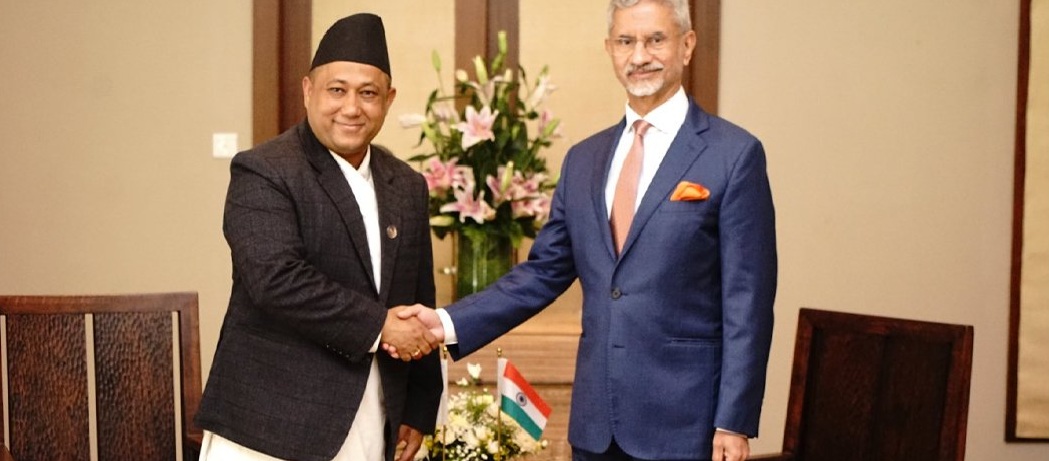
The service was jointly inaugurated by Nepal’s Foreign Minister Shishir Khanal and India’s External Affairs Minister S. Jaishankar during a ceremony held in India. The initiative marks a significant milestone in the growing financial integration between the neighboring countries.
With the launch of the new system, customers will be able to transfer funds directly between banks in Nepal and India through an interconnected digital payment infrastructure.
Linking Nepal’s NPI and India’s UPI
The new arrangement connects India’s Unified Payments Interface (UPI) with Nepal’s National Payment Interface (NPI), enabling seamless cross-border digital transactions.
The interoperability between the two payment networks is expected to simplify remittances, personal transfers, and other legitimate financial transactions between the two countries, reducing dependence on traditional and often slower transfer channels.
Officials believe the initiative will strengthen economic ties, facilitate cross-border mobility, and promote greater use of digital payments.
Initial Facility Focused on Indian Citizens in Nepal
For the time being, the service will primarily benefit Indian nationals working, residing, or staying temporarily in Nepal.
Under the newly launched arrangement, Indian citizens in Nepal will be able to transfer money directly to bank accounts in India through Nepal’s banking system.
According to the framework announced at the launch:
- An Indian citizen in Nepal can transfer up to INR 15,000 per transaction to India.
- The maximum monthly transfer limit from Nepal to India is INR 200,000.
- Likewise, Nepali nationals or residents in India can send up to INR 200,000 per transaction from India to Nepal through the linked payment system.
Boost for Digital Payments and Cross-Border Commerce
The direct transfer facility is expected to provide a major boost to digital financial services between Nepal and India, countries that share deep economic, cultural, and people-to-people ties.
Thousands of individuals regularly travel between the two nations for employment, education, tourism, trade, and family reasons. The ability to move money quickly and securely through formal banking channels is expected to improve convenience while supporting greater financial transparency.
Banking and payment industry experts view the initiative as an important step toward modernizing cross-border payment infrastructure in South Asia. By connecting two national payment ecosystems, the arrangement has the potential to reduce transaction friction, enhance financial inclusion, and encourage wider adoption of digital banking services.
As Nepal and India continue to deepen cooperation in the financial sector, the new direct transfer service could pave the way for broader cross-border payment solutions and greater regional economic integration in the years ahead.